
Forex trading promises financial freedom by getting rich quickly. On the surface, this business is one of the world’s most attractive and profitable markets. However, it is the darkest and deadliest of predators for most who enter it. Drawing on our experiences as financial consultants and trainers, we will pull aside the curtain on an industry that masquerades as a provider of financial stability, a service bedecked with promises that appear to deliver financial dreams. From the psychological and financial mechanisms that turn gold to lead and the hope of financial freedom into a financial nightmare, this article uncovers real-life stories of people we trained before the unforgiving tidal forces of Forex trading swept them away. We will offer the reader safer ground.
John’s Journey: The Pain of Loss in Forex Trading
As John faces his loss, he looks up at the screen from a shallow stance, his face illuminated by bright red numbers. To his horror, John’s hands shook when he realized he had lost everything. In his quest to make millions by trading Forex, he was a tragic case. But this small loss story is universal. It is repeated by thousands of aspiring traders, only multiplying the number of thousands of repetitions.
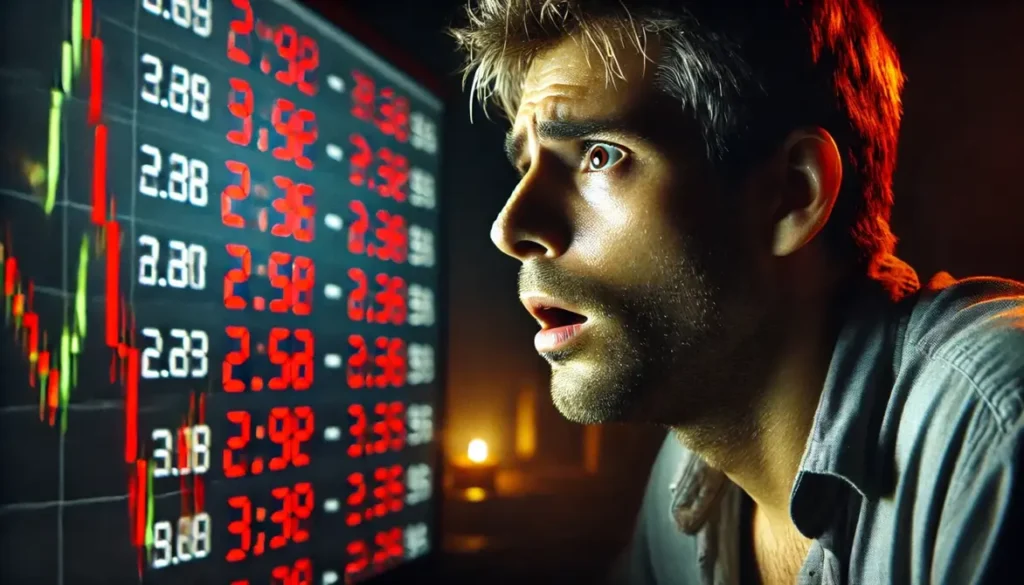
‘It looked so easy, John whispers. ‘Buy low, sell high. Make money while you sleep. Set yourself financially free. The allure of these taglines brings thousands to Forex every day. It is the dream of an H2 with wheels, a private island in a faraway archipelago, and an endless snowslope of cash—all wrapped up in the cover of economic freedom.
The brutal truth behind the curtain
But the truth behind the marketing hype that would have you believe otherwise is a lot more unglamorous. What we do know, by virtue of numerous studies, is that between 85 percent and 95 percent of retail Forex traders lose money. According to a 2009 U.S. Securities and Exchange Commission study, 85 percent of Forex traders lose money in any given quarter, and the average lifespan of a retail Forex account is four months.
Financial psychologist Sarah Thomas tells me, ‘For the Forex trader, the same neurochemicals that light up during pathological gambling engagement become activated during moments of potential gain, which is what makes trading an activity for dopamine-seekers.’
The psychological trap
This psychological trap manifests in several ways:
- Sunk-cost fallacy: A trader continues investing a lot of time and money because they’ve already sunk so much into their efforts that they will sooner die than break even!
- Optimism Bias: Inexperienced traders see losses as temporary setbacks, believing their big break is coming any day.
- Overconfidence bias: Following a series of winning trades, a distorted impression of your actual level of skill takes hold.
- Loss Aversion: We regret losses more than we enjoy equivalent gains, so traders begin to take riskier positions.
- Chasing Losses: Forex traders, like problem gamblers, tend to chase their losses, betting more after they lose.
All of these traps were highlighted in John’s experience. ‘I had a feeling the next trade would turn things around,’ he said. ‘I couldn’t stop, even after realizing I should have. It was like I was in a maze with no exit.
Financial and social ruin
Financially, Forex can be devastating. Emma Parker, a Certified Financial Planner, tells me: ‘I have several clients who have burned through most of their retirement nest eggs, tapped out credit cards and remortgaged their homes trying to recover their trading losses. And long after they have stopped trading, financially, they are still trying to recover from such a devastating hole—it can take years, even decades, to recover.’ Socially, Forex can be equally ruinous. ‘Many people break off their friendships, and there can be other social repercussions as a result,’ says Dee.
It’s not just the money that matters. Lisa provides further insight into how it affected their family: He was home, but it was like he wasn’t there. We hardly ever saw him. Whenever I brought it up, he’d say, ‘One more trade, and I’ll get a big win.’ I was unloading the dishwasher, and he was in his office, and it sounded like a spirit was there. It was like we were living with a ghost.

Myth of Education
The most insidious part of the Forex industry is the countless ‘educational’ programs. David Chen, a former teacher at a Forex boot camp, says: ‘Basically, 90 percent of those programs are to get you hooked, not to make you profitable. The real reason to do it is to keep you trading—and losing—until you go bust.
Such programs often rely on psychological sleights of hand, such as demo accounts with virtual money, to generate an illusory competence. ‘In demo accounts, you don’t have the same emotional experience when trading with money,’ Chen explains. ‘It’s like when you play a video game instead of playing in the real market.’
Regulatory issues and frauds
International and unregulated, the Forex market is particularly prone to fraud. ‘A lot of retail Forex traders do not even realize that they are often trading against their broker, not on an open exchange,’ warns James Harper, a New York attorney whose practice focuses on financial fraud allegations. ‘Some brokers employ tactics such as stop-loss hunting or spread manipulation to ensure that they always win on the trade.’
Getting lost money back is virtually impossible, at least when dealing with an offshore broker. ‘By the time many people realize they’ve been ripped off, the money is long gone, often somewhere outside of the reach of law enforcement,’ Harper says.
Safer Alternatives to Forex Trading
Anyone tempted to pursue this so-called money-making or lifestyle-enhancing opportunity should begin by considering safer and more proven alternatives to financial security; a few are listed below.
- Learn on the job: Never stop upskilling. The better you know your craft and expand the range of your knowledge, the better job opportunities and higher salaries will come your way. Take classes, get certifications, and teach yourself new skills that your industry needs.
- Side hustles: Build an income stream based on your hobby or existing skill. Start baking and selling muffins on the weekend, or learn to fix computers, walk dogs, or something else. Starting small and building up can provide a chunk of change and positive cash flow, and perhaps one day, even be your full-time income.
- Investing in Real Estate: Despite added risk and liability, real estate investments can still deliver consistent returns and the advantage of owning something of direct value.
- Old-School Savings and Investment: High-yield savings accounts, index funds, and diversified investment portfolios are ways to let your savings grow without the peaks and valleys (or the likelihood of blowing up) you find with Forex.
- Multiple Streams of Income: Supplement a day job with freelancing, consulting, or digital products to create a more resilient cash flow.
The steps to recovery from the forex trap
The steps to recovery from the forex trap are outlined by Dr. Thompson as follows:

- Realize that you might have a problem. After the inevitable decrease in money and the miserable, lonely state of Facebook arguments about who left the toilet seat, the first step is awareness. 2. Admit that you have a problem. You can do this in the mirror with your wedding picture. 3. Find people who will support you through recovery. The support is easy to find once you submit to the law of attraction, just as it is to build a massive trading account. Remember the way you used to talk and study nonsense like ‘the law of attraction’ at the beginning of your profession?
Accept that you’ve got a problem: it is gambling, and you’re hooked.
- Go to a Professional: Talk to therapists who work with addicts and counselors who have specialized in monetary troubles to assist work via the mental as well as the financial aspects of recovery.
- Cut Ties: Close trading accounts and remove all trading apps and software.
- Fix Your Budget: Establish a realistic plan that will allow you to repay debts and start saving.
- Mend relationships: Discuss the condition openly with loved ones and rebuild their confidence.
- Find New Purpose: Replace the trading obsession with healthy activities and goals.
John managed to recover and rid himself of his compulsive trading. ‘It took a long time to get out of that hole, he admits. ‘But I’m lucky to have my family back in my life and my accounts balanced. Nothing in the market has ever felt better than being home with them.
Conclusion
Forex trading is not a quick and easy way to make money. Regardless of how slick the marketing of the product is, it leads a large number of ordinary people into financial suicide. So, if you are tempted to get involved with Forex, stop for a moment and think about this carefully. Your life, your family and friends and your life path are irreplaceable; don’t sacrifice them on the blood-stained altar of snake-oil salespeople and fool’s gold.
But instead of all that noise and hype, build real substance into your life—invest in yourself and your relationships in steady, sustainable strategies for financial growth. You might get there slower, but you will get there free: not trapped in a constant cycle of addiction and loss, but feeling finally in control.