
For many years, I was deeply convinced that forex trading was the golden key to unlocking financial freedom. The allure of making quick profits and the adrenaline rush of the markets had me captivated from the very start. Like many others who dive into this fast-paced world, I envisioned a life filled with endless possibilities—wealth, independence, and freedom to work from anywhere. I spent countless hours analyzing charts, fine-tuning strategies, and absorbing as much information as I could about trading. My conviction became so profound that I even turned to The Art of War by Sun Tzu, a classic text on strategy, believing its ancient wisdom would help me navigate the volatile forex battlefield and emerge victorious.
But as time passed, my journey took a much different direction than I had anticipated. Instead of achieving the success I sought, I came to a realization that shook the very foundation of my beliefs: forex trading, at least for me, was an illusion—a mirage of success that was harder to grasp the more I chased it.
The Allure of Forex Trading
When I first entered the forex market, I was entranced by the promise of wealth. The sight of rapidly changing charts, the excitement of making a winning trade, and the endless stories of people who had “made it big” fueled my drive. I believed that I, too, could be part of that elite group, living a life free from financial worry. The market, with its dynamic nature, felt like an exciting playground where knowledge, skill, and a bit of luck could potentially lead to quick success.
As a beginner, I experienced moments of euphoria from small victories—those first few trades where the market moved in my favor. It was intoxicating. Each win, no matter how small, made me believe that I was getting closer to the financial freedom I had always dreamed of. I could almost picture it: a future where I was no longer tied to a nine-to-five job, where my income wasn’t capped by a salary, and where my money worked for me.
However, this initial phase of excitement—this “honeymoon period”—soon gave way to a much harsher reality. The forex market is incredibly complex, and while early wins can make you feel invincible, the losses that inevitably follow can be devastating. I began to realize that many of the online success stories were carefully curated, often skipping over the countless traders who faced significant losses. The market wasn’t just about strategy and knowledge; it was about emotion, timing, and, sometimes, sheer luck. And for every person who struck gold, there were many more who quietly disappeared from the scene.
Learning from The Art of War
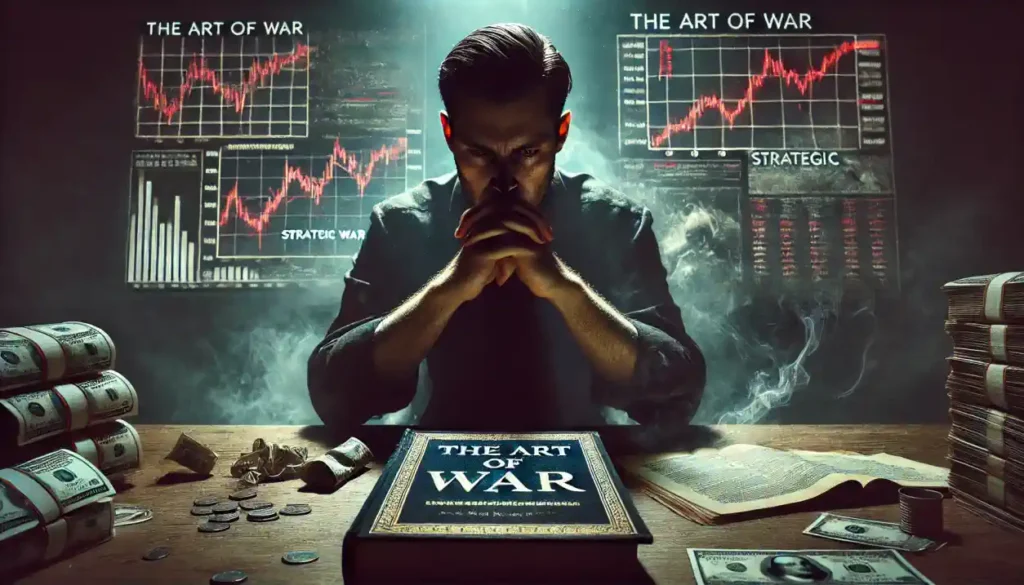
Desperate to outsmart the market, I turned to one of the most celebrated books on strategy, The Art of War by Sun Tzu. I believed that the principles of warfare could be applied to trading, that by understanding strategy and deception, I could gain an edge over other traders and outmaneuver the market. I studied Sun Tzu’s teachings diligently, applying them in ways I thought would lead me to victory.
One of the key lessons from The Art of War is that “every battle is won before it is fought.” I took this to heart. I meticulously planned each trade, analyzing market patterns, reading the behavior of other traders, and setting up strategies that I thought would position me for success. I saw the market as my opponent, and just like in warfare, I sought to anticipate its moves. Another of Sun Tzu’s principles, “know thy enemy,” became central to my approach. I spent countless hours researching, attempting to “know” the market better than anyone else.
However, what I failed to realize at the time was that the forex market isn’t a traditional opponent. It is not a battlefield with a single enemy you can study and outwit. The market is chaotic, fluid, and often irrational. It doesn’t play by the rules, and strategies that work one day can completely backfire the next. I was trying to outsmart a force much larger and more unpredictable than I had anticipated. I realized that in many ways, I was like a soldier trying to control the tides of the ocean—an impossible feat.
The Reality of Forex Trading
As time went on, the true nature of forex trading began to reveal itself. While the market could be thrilling and rewarding on rare occasions, more often than not, it was a source of stress, anxiety, and frustration. I quickly learned that forex trading wasn’t just about understanding the market; it was about understanding myself—my emotions, my impulses, and my limits.
One of the biggest challenges I faced was managing my emotions. In the heat of the moment, it’s easy to make impulsive decisions. A sudden market movement can trigger fear or greed, leading to decisions that, in retrospect, seem irrational. I experienced this first-hand on multiple occasions. The thrill of seeing a trade turn profitable would often be followed by the dread of seeing those profits wiped away in a matter of minutes.
Losses weren’t just financial—they were emotional. Every time I lost a significant amount of money, it felt like a personal failure. My confidence would take a hit, and I would question whether I was cut out for this. But I continued to push forward, thinking that if I just refined my strategy or controlled my emotions better, success would eventually come. What I didn’t realize at the time was that I was chasing an illusion.
The emotional toll of trading can be immense. It’s a rollercoaster of highs and lows, and over time, the stress began to wear on me. The constant need to stay on top of the market, the fear of missing out on opportunities, and the anxiety of watching trades fluctuate all took a toll on my mental health. Forex trading wasn’t just about the money—it was about managing stress and finding balance, something I struggled with as I became more deeply immersed in the world of trading.

The Turning Point
The turning point in my journey came when I could no longer ignore the toll that trading was taking on my well-being. After a particularly challenging period filled with losses and sleepless nights, I had to face the reality that forex trading wasn’t the path to success I had envisioned. I had spent years chasing after an idealized version of financial freedom, but in the process, I had lost sight of what truly mattered—my mental health, my peace of mind, and my ability to live a balanced life.
Letting go of forex trading wasn’t easy. It felt like giving up on something I had invested so much time, energy, and emotion into. There was a deep internal conflict, as I wrestled with feelings of failure and fear of the unknown. What if I was making a mistake by walking away? What if I just needed one more breakthrough to finally make it?
But deep down, I knew that I needed to prioritize my well-being. I had been chasing an illusion for too long, and it was time to confront the truth. Walking away from trading felt both terrifying and liberating. It was a decision that required courage, but it also marked the beginning of a new chapter in my life—one where I would no longer be defined by the ups and downs of the market.
The Aftermath
Leaving the forex market was a challenging but necessary decision. In the aftermath, I took the time to reflect on the lessons I had learned throughout my trading journey. One of the most important takeaways was the need for a balanced approach to financial decision-making. Chasing quick profits may seem appealing, but it often comes at the cost of emotional and psychological stability.
I began to explore alternative ways to grow my wealth, focusing on investments that aligned with my long-term goals and values. Rather than chasing the volatility of the market, I sought out stable and sustainable investment opportunities that would provide security without the emotional toll. It was a slow and steady process, but over time, I felt more in control of my financial future.
More importantly, I learned to prioritize my mental health. The stress and anxiety I had experienced during my time as a trader had been a wake-up call, and I knew I couldn’t continue living that way. I began practicing mindfulness and finding ways to create balance in my life. Whether it was through hobbies, exercise, or simply spending time with loved ones, I made it a priority to focus on things that brought me joy and peace.
Conclusion
My journey through forex trading and the lessons I learned from The Art of War have shaped my understanding of success in profound ways. I now realize that true success is not about quick wealth or mastering the markets—it’s about making informed decisions that prioritize well-being, stability, and long-term growth. The principles of strategy and war, while valuable in certain contexts, could not fully prepare me for the chaotic and emotional nature of trading.
For anyone considering a path in forex trading, I urge you to reflect on your motivations and to approach the market with caution. Trading can be thrilling, but it can also be incredibly taxing, both financially and emotionally. The pursuit of success is rarely a straight path, and sometimes, the wisest choice is knowing when to walk away.
In the end, the most important lesson I learned is that success is not just about financial gain—it’s about living a life that aligns with your values and brings you peace.