
The old African proverb warns: “The hunter who chases two rabbits catches neither.” But in the merciless world of Forex trading, there’s an even more chilling truth: sometimes the hunter doesn’t realize he’s become the prey.
I remember sitting in my dimly lit office, bathed in the blue glow of six monitors, watching currency pairs dance across my screens. My fingers hovered over the keyboard, ready to execute what I thought was the perfect trade. After fifteen years in the market, I believed I had mastered the art of trade management. My strategy was refined, my risk parameters set with mathematical precision, and my emotional control was seemingly unshakeable. I was wrong – catastrophically wrong.
The Illusion of Control
Picture a master chess player, confident in their ability to see ten moves ahead. That was me, meticulously plotting entry points, calculating risk-reward ratios, and setting stop-losses with surgical precision. I had constructed an elaborate fortress of trading rules and risk management strategies. But what I failed to realize was that I wasn’t playing chess at all – I was playing a game where the board itself was alive, constantly shifting, and the pieces moved on their own accord.
The market doesn’t just move; it hunts. It stalks. It waits.
The Predator’s Patient Game
Let me share a story that changed my perspective forever. In the summer of 2019, I was tracking a promising setup in the EUR/USD pair. All my indicators aligned perfectly – the technical analysis, the fundamental backdrop, even the market sentiment seemed to confirm my bias. I entered the trade with my usual position size, stop-loss in place, and take-profit levels carefully calculated.
The trade moved in my favor almost immediately. I felt that familiar surge of validation, the quiet satisfaction of a hunter who has perfectly anticipated his prey’s movement. As my profit grew, I adjusted my stop-loss, following all the textbook rules of trade management. I was, I thought, in complete control.
Then the market revealed its true nature.
What happened next wasn’t just a simple reversal – it was a masterclass in predatory behavior. The price didn’t just move against me; it moved with an almost intelligent malice. It would pause at levels that kept me hopeful, give small bounces that reinforced my position, and then continue its methodical destruction of my carefully laid plans.
By the time I finally exited the trade, I realized something profound: I hadn’t been managing my trade at all. The market had been managing me.
The Psychological Trap
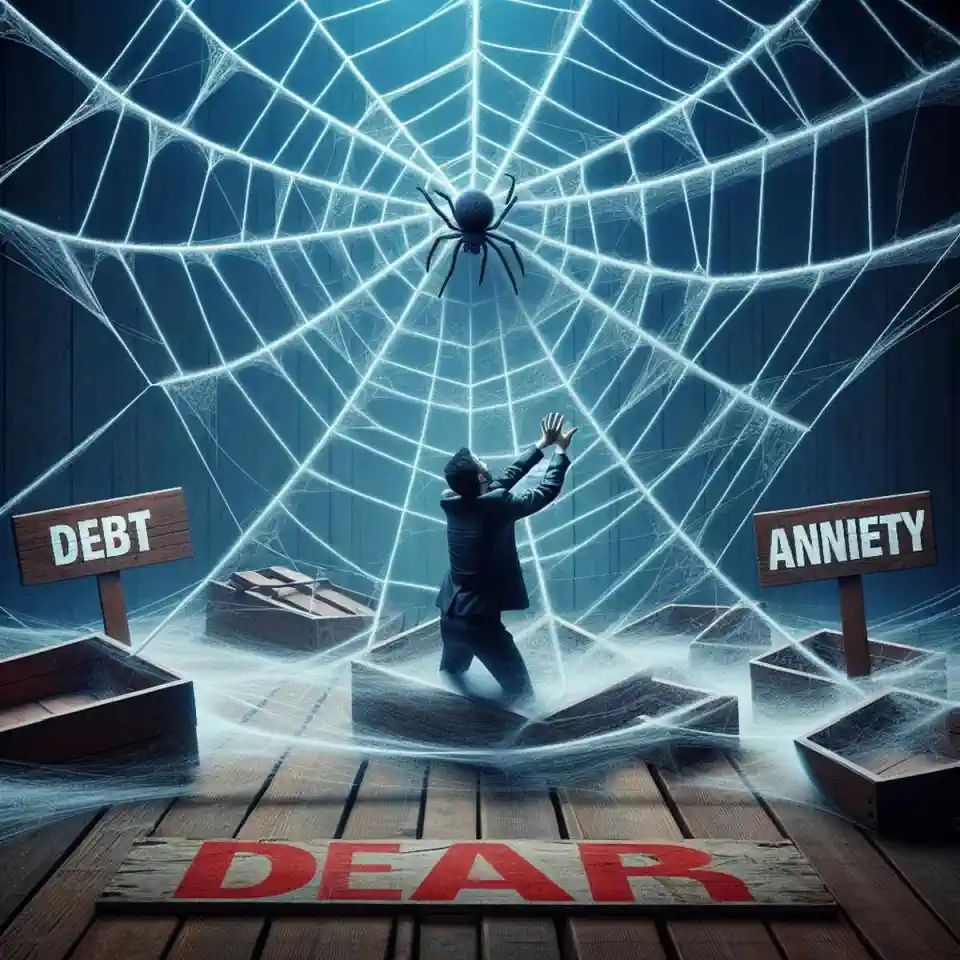
Think of a spider’s web. It’s not just a trap; it’s a sophisticated instrument that uses the victim’s own struggles against it. The more a fly fights to escape, the more entangled it becomes. The Forex market works in much the same way.
When traders believe they’re managing their trades, they’re actually being managed by a series of psychological traps:
- The Confirmation Bias Web: Every small move in your favor feels like confirmation of your strategy, leading you to hold positions longer than you should.
- The Sunk Cost Snare: The more time and emotional energy you invest in a trade, the harder it becomes to let go, even when all signs point to disaster.
- The False Control Trap: The very tools we use to manage our trades – stop-losses, take-profit orders, position sizing – create an illusion of control that makes us vulnerable to the market’s true power.
The Tiger in the Tall Grass
Consider the tiger’s hunting strategy. It doesn’t chase its prey across the open savannah. Instead, it uses the grass as cover, moving silently, letting its prey walk into the perfect position. The market employs similar tactics, using our own confidence as camouflage for its true intentions.
I once witnessed a fellow trader, Marcus, fall victim to this predatory pattern. He had developed what he believed was a foolproof system for trading breakouts. His back-testing showed impressive results, and his risk management was impeccable. For three months, he made consistent profits, growing his account by 40%.
Then the market changed its pattern, ever so subtly. The breakouts that had been so profitable began to fail, but not immediately. They would move just far enough to validate his entry before reversing sharply. Each time, Marcus adjusted his strategy, thinking he was adapting to new market conditions. In reality, he was being led deeper into the jungle, away from the safety of his original rules.
Within two weeks, he had lost six months’ worth of profits. The market hadn’t just taken his money; it had taken his confidence, his strategy, and his belief in his ability to manage trades.
The Dark Forest of Leverage
Perhaps the most dangerous aspect of Forex trading is the false sense of power that leverage provides. It’s like giving a hunter a more powerful weapon – it doesn’t make the jungle any less dangerous; it just makes the hunter more reckless.
I’ve seen traders with decades of experience fall into this trap. They believe that their sophisticated trading platforms, their advanced technical indicators, and their ability to use leverage give them control over their trades. But leverage is just another tool the market uses to manage us. It magnifies not just our potential profits, but our psychological vulnerabilities.
The Market’s Ultimate Deception
The market’s greatest trick isn’t taking our money – it’s convincing us that we’re in control while doing so. It’s like a master illusionist who makes us believe we’re choosing the card freely when the choice was predetermined all along.
Every trading strategy, every risk management technique, every carefully planned entry and exit point – these are not shields against the market’s power. They are merely the strings the market uses to puppet our decisions.

Escaping the Jungle
The truth about Forex trading isn’t that you can’t win – it’s that you can’t control. The moment you think you’re managing your trades is the moment you’re most vulnerable. The market isn’t just bigger than you; it’s smarter, more patient, and infinitely more capable of managing your psychology than you are of managing your trades.
I learned this lesson at great cost, both financial and emotional. The day I accepted that I wasn’t managing my trades – that I had never been managing my trades – was the day I began to see the market for what it truly is: not a jungle to be conquered, but a predator to be respected and, ultimately, avoided.
For those still in the jungle, still believing they can outsmart the tiger, I offer this final thought: The most successful hunt is the one you walk away from. The true victory in Forex trading isn’t in mastering trade management – it’s in recognizing that the very concept of managing trades is the market’s most dangerous lure.
Remember, in the dark forest of Forex, you’re never the hunter. You’re not even the prey. You’re simply a participant in a game where the rules are written in a language you can’t read, by a player you can’t see, for an outcome that was decided long before you placed your first trade.
The only winning move? Stop playing the game.