
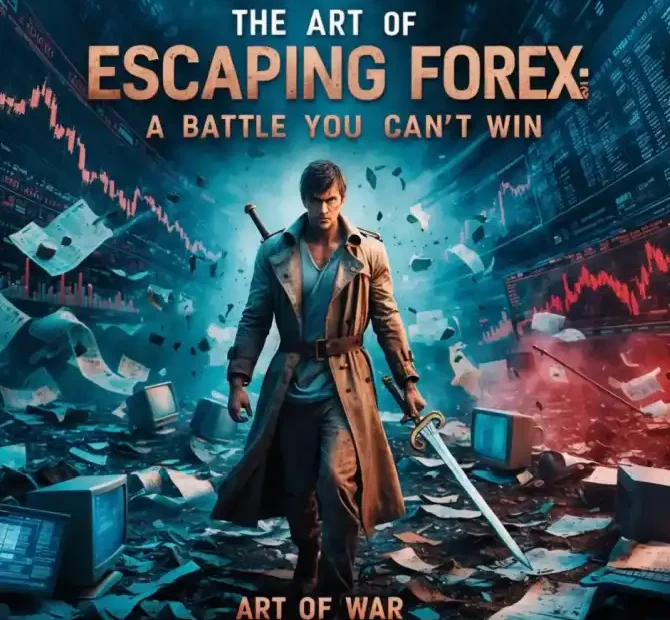
In The Art of War, Sun Tzu writes extensively about the deceptive nature of battle and the subtle, often unseen traps that lie in wait for the unwary. For those who venture into Forex, this same treacherous terrain awaits, with promises of fortune concealing pitfalls that are far more destructive. Forex itself operates like a general skilled in deception, using psychological tactics that mirror Sun Tzu’s teachings, yet with one grim difference: here, the trader will always be the one outmatched. Understanding this reality—why Forex is not designed to be conquered—can save one from its merciless hold.
1. Entrapped by Perception: The Battlefield of Psychological Confusion
Sun Tzu notes, “In war, the way is to avoid what is strong and to strike at what is weak.” Forex is an expert at this kind of ambush. It doesn’t present itself as a straightforward opponent; rather, it waits for traders to reveal their vulnerabilities—often hidden even from themselves. Forex thrives on traders’ false confidence, the belief that with enough charts, analysis, and strategies, they can somehow outmaneuver the market. But Forex is designed to disorient, playing on each trader’s unique insecurities and blind spots until they’re chasing shadows.
This battlefield is never clear. While a general might plan around the strengths and weaknesses of an opposing force, Forex shifts and adapts, always able to strike where the trader is weakest. Rather than trying to tame it, understanding that Forex is a master of psychological warfare is the first and perhaps only step toward escaping its clutches. Like Sun Tzu’s generals who refuse to fight an enemy in impenetrable territory, the best move here is not to enter the fight at all.
2. False Security: The Deceptive Terrain of “Control”
In The Art of War, Sun Tzu describes different kinds of terrain, each presenting its own danger. “If the ground is hemmed-in, you must resort to stratagem,” he warns. Forex creates this “hemmed-in” terrain through the illusion of control. Traders see charts, historical trends, and seemingly predictable patterns, and they are led to believe that, with enough knowledge, they can control outcomes. But the moment they step onto this battlefield, the ground shifts beneath them—strategies that worked one day fail the next, charts provide false signals, and “trends” collapse without warning.
The truth is, Forex does not provide any firm footing. It is a terrain that traps traders, allowing them just enough apparent success to encourage deeper engagement before pulling the rug out from under them. Like Sun Tzu’s warning against advancing onto ground one cannot secure, here, traders must recognize that the illusion of control is precisely that—a trap set to lead them further into the market’s snares.
3. Promises of Wealth as Lures: Forex’s “Enticements to the Enemy”
Sun Tzu advises generals to use bait to draw opponents into disadvantageous positions, stating, “Hold out baits to entice the enemy. Feign disorder, and crush him.” Forex is a master at presenting itself as an accessible and lucrative field where fortunes can be made with minimal effort. Ads promise financial freedom, success stories fill social media feeds, and the initial trades might even show small, tantalizing wins. But these wins are not the fruits of one’s strategy—they’re the bait.
Just as a general might lure an enemy with false hope, Forex plays on traders’ desires and ambitions, drawing them deeper into a game that is, by design, stacked against them. The small profits entice, creating a powerful, almost addictive lure that keeps traders hooked, even as they overlook the greater losses creeping up. Recognizing that these “easy wins” are nothing but carefully laid traps is vital for escape, as every win is crafted to lead traders further into the market’s grasp.

4. The Trap of Prolonged Engagement: The Bleeding of Resources
Sun Tzu warns that “There is no instance of a country having benefited from prolonged warfare.” Prolonged battles drain supplies, exhaust soldiers, and weaken resolve. Forex operates by the same principles, bleeding traders slowly rather than striking a single, decisive blow. This is the art of attrition warfare—one that does not conquer all at once but wears down its target over time.
Forex is structured to draw traders into extended engagements, urging them to “stick it out” through losses, to “double down” after bad trades, and to “stay the course” because the next win is just around the corner. But this persistence, rather than leading to victory, only ensures the gradual depletion of a trader’s resources—financial, emotional, and psychological. Traders must realize that Forex does not reward endurance; instead, it preys upon it, a truth Sun Tzu would recognize as a trap in the guise of a battle.
5. The Silent Enemy: Forex as the “Invisible Adversary”
One of Sun Tzu’s most critical principles is understanding the enemy’s position and intentions. “The whole secret lies in confusing the enemy, so that he cannot fathom our real intent.” Forex embodies this tactic by remaining faceless and formless, giving traders no clear adversary to target. In traditional warfare, a soldier can observe his opponent’s movements, anticipate maneuvers, and respond accordingly. But Forex offers nothing so tangible. Its movements are abstract, driven by countless variables no individual can fully comprehend, and every shift in the market appears to have a mind of its own.
Traders are thus left battling an invisible, shifting force that does not play by the rules. Without a “face” to confront, there is no strategy to defeat it, no way to negotiate or parley. The market, like Sun Tzu’s ideal enemy, is hidden, unpredictable, and unassailable. To fight against it is to fight against shadows, and victory is as elusive as a ghost on the battlefield.
6. The Seduction of Expertise: Forex’s False Confidence
In the art of warfare, overconfidence in one’s strength can lead to ruin. Sun Tzu advises, “If your forces are ten to the enemy’s one, surround him; if five to one, attack him.” Forex, however, seduces traders into overestimating their knowledge and skills, leading them to believe they can control outcomes with enough study or strategy. Yet no amount of preparation or expertise guarantees success, as the market’s complexity surpasses even the most rigorous analysis.
Traders who believe their expertise grants them control are entering battle without understanding their true position. Forex uses this sense of “preparedness” to its advantage, creating a false battlefield where every strategy fails to account for the unpredictable forces that drive market behavior. Just as a general would never attack an enemy with unknown capabilities, traders should recognize that there is no amount of knowledge that can offer them an advantage over a system designed to be insurmountable.

7. The Inevitable Collapse: Leaving the Battlefield
Sun Tzu cautions that “He who knows when he can fight and when he cannot, will be victorious.” For traders in Forex, the only true path to victory lies in understanding when to walk away. The market’s allure is powerful, but it is nothing more than an ever-evolving trap designed to keep traders engaged. Forex will not reward loyalty, persistence, or even skill. The battlefield is rigged, and the longer one stays, the more inevitable defeat becomes.
Leaving Forex is not an admission of failure but an act of wisdom. Recognizing that the system is crafted to ensnare, not empower, is the true lesson here. Sun Tzu’s advice to avoid unwinnable battles is a call for traders to consider their wellbeing over the empty promises of financial freedom that Forex dangles before them. This market, with its mirage of success, is a battle that cannot be won. Victory lies not in learning to fight Forex better but in refusing to play its game.
Conclusion: The True Path to Freedom
The Art of War teaches that strategy is about recognizing terrain, understanding the strength of one’s adversary, and, above all, knowing when to engage and when to retreat. Forex presents itself as an opportunity for wealth, but it is, in reality, an adversary employing the very tactics Sun Tzu warns against. It shifts, deceives, exhausts, and manipulates, leaving traders drained, defeated, and entrapped.
To those drawn to Forex, let Sun Tzu’s wisdom serve as a beacon. The market is not a battlefield to conquer but a snare to escape. The path to true freedom lies in leaving behind this endless, unwinnable war. Recognize the market’s tactics for what they are: strategies designed not for profit but for loss. Only by walking away can one truly claim victory, reclaiming time, peace, and mental clarity from an adversary that offers none in return.