
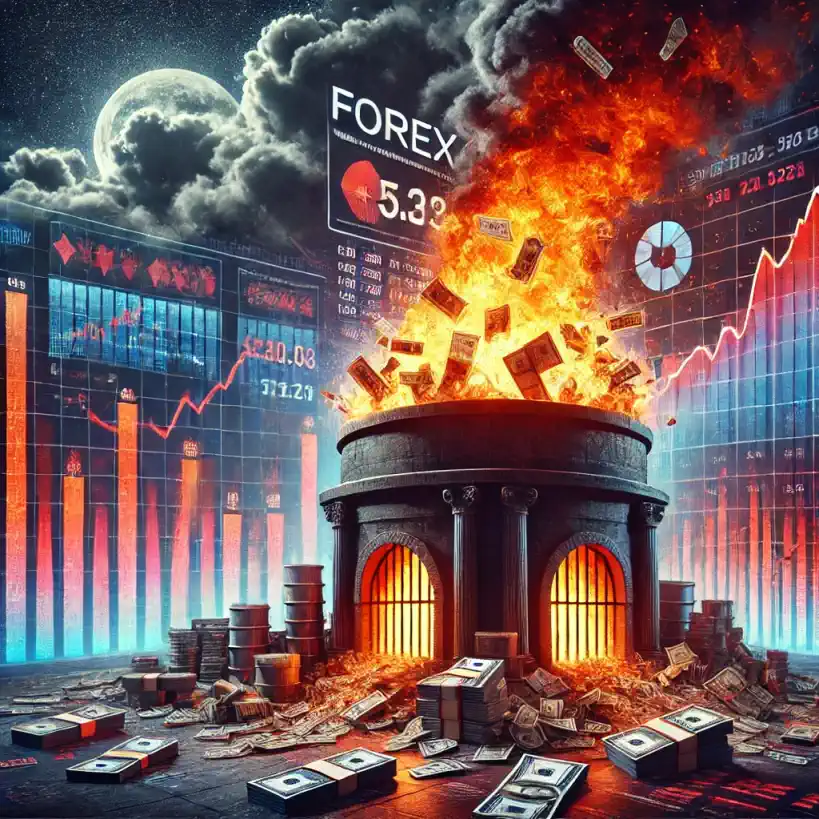
Have you ever dreamed of making it big in the financial world? Are you quitting your 9-to-5 job and living the life of a successful trader? If so, you’ve probably heard about Forex trading. It’s everywhere these days – flashy ads, success stories on social media, and “gurus” promising to teach you the secrets of instant wealth. But here’s the truth that nobody wants to tell you: Forex is not your ticket to financial freedom. In fact, it’s quite the opposite. It’s a merciless money incinerator that can burn through your savings faster than you can say “currency pair.”
The Mirage of Quick Profits: Why Forex Seems So Tempting
Let’s be honest – we’ve all fallen for get-rich-quick schemes at some point in our lives. Remember that time you bought a lottery ticket, convinced that this time it was your turn to win big? Forex trading taps into that same part of our brains, the part that dreams of instant success and financial security.
Picture this: You’re scrolling through your social media feed, and suddenly you see an ad. There’s a guy in a sharp suit, standing next to a fancy car, talking about how he made millions through Forex trading. He makes it sound so easy – just a few clicks, and you, too, could be living the high life. It’s tempting, right?
People often describe the Forex market as a magical place where anyone with a computer and internet can quickly become a millionaire. They tell you it’s all about strategy, about outsmarting the market. And the best part? You can do it from anywhere – your living room, a beach in Bali, or even your local coffee shop.
But here’s what they don’t tell you: that feeling of control, that belief that you can predict the market’s every move? It’s an illusion. A dangerous one.
The True Nature of Forex: A Game of Chance, Not Strategy
Now, let me let you in on a little secret: Forex trading is not that different from gambling. Shocking, right? Take a moment to consider this. Sitting at a poker table in Vegas, you might feel confident about your strategy. You might even win a few hands. But in the long run, who always comes out on top? The house.
Forex is the same. Sure, you might have a good day or even a good week. You might even convince yourself that you’ve cracked the code. But here’s the cold, hard truth: the currency markets are wildly unpredictable. They’re affected by countless factors – political events, economic data, even natural disasters. No one, not even the most experienced traders, can consistently predict these movements.
Don’t believe me? Let me tell you about Jake. Jake was a smart guy – an engineer with a knack for numbers. He thought he could apply his analytical skills to Forex trading and make a killing. For the first few months, things were looking good. He was up $5,000 and feeling on top of the world. But then came the Brexit vote. In just one day, Jake lost all his profits and a significant part of his initial investment. Jake’s story isn’t unique. It’s the reality for most Forex traders.
The High Risk and Low Reward of Forex Trading
Now, you might be thinking, “But surely some people make money from Forex, right?” Well, yes, some do. But they’re the exception, not the rule. Let me throw some numbers at you: according to various studies, anywhere from 85% to 95% of retail Forex traders lose money. Let that sink in for a moment. Would you board a plane if you knew it had only a 5% to 15% chance of reaching its destination?
It gets even worse: Forex trading is not just risky; it’s actually structured to work against you. Remember how I mentioned that Forex is like gambling, In the world of Forex, the broker operates much like a casino, stacking the odds in their favor. In other words, brokers set up the trading system in ways that increase their chances of profiting from your losses, putting the trader at a disadvantage.
First, there’s leverage. Brokers offer high leverage ratios, sometimes as high as 500:1. They’ll tell you this is great because it allows you to control large positions with a small amount of money. What they won’t emphasize is that while leverage can magnify your profits, it also magnifies your losses. And in a volatile market like Forex, losses can come fast and hard.
Then there are the spreads and commissions. Every time you make a trade, the broker takes a cut. It might seem small, but these fees add up quickly, eating into any profits you might make.
And let’s not forget about slippage – that annoying phenomenon where your trades don’t execute at the exact price you want. Guess what? More often than not, slippage works in the broker’s favor, not yours.

Behind the Scenes: How Brokers Profit from Your Losses
Speaking of brokers, let’s pull back the curtain and see how they really operate. You might think that Forex brokers are just neutral intermediaries, facilitating trades and taking a small cut for their services. But the reality is far more sinister.
Most Forex brokers use a business model called “market making.” Sounds innocent enough, right? Wrong. As a market maker, the broker is essentially taking the opposite side of your trade. In other words, they profit directly from your losses.
Let that sink in for a moment. The very entity that’s supposed to be helping you trade is actually betting against you. It’s like playing poker with someone who can see your cards.
Moreover, some unethical brokers use practices that further disadvantage you. They might manipulate prices, causing sudden spikes or drops that trigger your stop-loss orders. Or they might introduce delays in trade execution, ensuring that you always get the worst possible price.
Remember Sarah? She thought she’d found a reputable broker with great customer service. But when she tried to withdraw her profits after a successful trade, suddenly there were “technical issues.” By the time these issues were resolved, the market had turned, and Sarah’s profits had evaporated. Coincidence? I think not.
The Psychological Toll: How Forex Trading Destroys Lives
Now, let’s talk about something that often gets overlooked in discussions about Forex trading: the human cost. We’re not just talking about lost money here (although that’s bad enough). We’re talking about shattered dreams, broken relationships, and damaged mental health.
Meet Tom. Tom was a successful small business owner with a loving family. He started Forex trading as a hobby, but it quickly became an obsession. He’d stay up all night, glued to his computer screen, watching the markets. His business started to suffer. His wife complained that he was never present, even when he was physically there.
But Tom couldn’t stop. Every loss made him more determined to win it back. He started dipping into his kids’ college fund, convinced that the next trade would be the big one that would turn everything around. It never came.
By the time Tom finally admitted he had a problem, he had lost his business, his savings, and his family. The psychological toll was enormous. He fell into a deep depression, struggling with feelings of guilt and worthlessness.
Tom’s story might sound extreme, but it’s more common than you might think. Forex trading can be addictive. The highs of a winning trade can be euphoric, creating a rush that traders chase again and again. But the lows are devastating, leading to anxiety, depression, and, in some cases, even thoughts of suicide.

Escaping the Forex Trap: Alternatives to Secure Your Wealth
If you’ve made it this far, you might be feeling a bit discouraged. Maybe you’ve already dipped your toes into Forex trading and are wondering what to do next. Or maybe you’re relieved that you dodged this particular bullet. Either way, don’t worry – there are better, safer ways to grow your wealth.
First things first: if you’re currently trading Forex, stop. Right now. Close your positions, withdraw your money (if you have any left), and close your account. It might be hard, especially if you’re currently at a loss. You might be tempted to try to “win it back.” Don’t. Remember, the longer you play, the more you’re likely to lose.
Now, let’s talk about what you should do instead. Here are some alternatives that, while not as exciting as Forex trading, are much more likely to help you build long-term wealth:
- Real Estate: While it requires more capital to start, real estate can be a great way to build wealth over time. Whether you’re buying property to rent out or flipping houses, real estate offers tangible assets and the potential for steady income.
- Start a Business: If you have an entrepreneurial spirit, consider starting your own business. It’s not easy, but it allows you to build something of your own and potentially create lasting wealth.
- Education: This might not seem like a direct path to wealth, but investing in your own skills and knowledge can pay off enormously in the long run. Whether it’s learning to code, getting an advanced degree, or acquiring a new skill, education can open doors to higher-paying jobs and opportunities.
- Savings and Budgeting: It’s not glamorous, but one of the surest paths to financial security is simply spending less than you earn and consistently saving and investing the difference.
Conclusion: Choose Wisdom Over False Promises
As we wrap up this journey through the treacherous world of Forex trading, I want you to remember one thing: there are no shortcuts to wealth. The path to financial security isn’t paved with get-rich-quick schemes or high-risk gambles. It’s built on education, discipline, and patience.
Forex trading isn’t the opportunity it’s made out to be. It’s a dangerous trap that has ruined countless lives and incinerated billions in hard-earned savings. The few success stories you hear are the exceptions, not the rule. They’re the lucky few who managed to get out while they were ahead – or the brokers and “gurus” profiting from others’ losses.
Instead of chasing the Forex mirage, focus on building real, lasting wealth. Educate yourself about personal finance. Live below your means and save consistently. Invest in low-cost, diversified funds. Build valuable skills. Start a business if you have the inclination. These methods might not be as exciting as watching currency pairs zoom up and down on a screen, but they work.
Remember, your financial future is too important to gamble away on Forex trading. Choose wisdom over false promises. Your future self will thank you for it.