

Let us first agree on one fundamental truth: Forex is not real trading, it is gambling—disguised under the veil of financial markets. There’s no denying it. You’re simply betting on whether a price will go up or down. Whether it fluctuates for a while or not, it will either rise or fall. That’s all there is to it.
You’re not looking to buy or sell currencies, and you’re not interested in owning anything. It doesn’t matter whether you’re working with the Euro-dollar pair, the pound-dollar pair, or any other. It’s all just numbers and charts. What you truly care about is whether your intuition holds up—whether you can predict if the price will rise or fall. That’s what determines whether you win or lose, nothing more.
But here’s the real kicker: what you lose, someone else wins. Forex is nothing more than gambling disguised as trading. It gives the appearance of a market, but in reality, it’s a bet, plain and simple.
The Market’s Hidden Agenda
The market is far more complicated than it seems, but let me simplify it for you. Those who control the market push it in the direction they desire. If you happen to be on the right side of their movement, congratulations—you win. But if not, you lose. It’s as simple as that.
Let me share a personal experience. I traded for a long time through a company that provided data on the volume of sellers and buyers in the market. Often, I’d see that the majority of traders were buying a certain currency, like the Euro-dollar pair, but suddenly, without any warning, the market would go in the opposite direction. For example, I once saw that 85% of traders were buying, while only 15% were selling. Then, out of nowhere, the market dropped hard in favor of the 15%. The 85% lost their positions. It was as if the market knew exactly where the majority stood and deliberately moved against them.
This wasn’t an isolated incident. Time and again, I would see strong indicators, news, and events all pointing toward a specific direction—let’s say the Euro should rise—but then, out of nowhere, the Euro would fall. Despite everything indicating a rise, the market would crash, making no sense whatsoever.
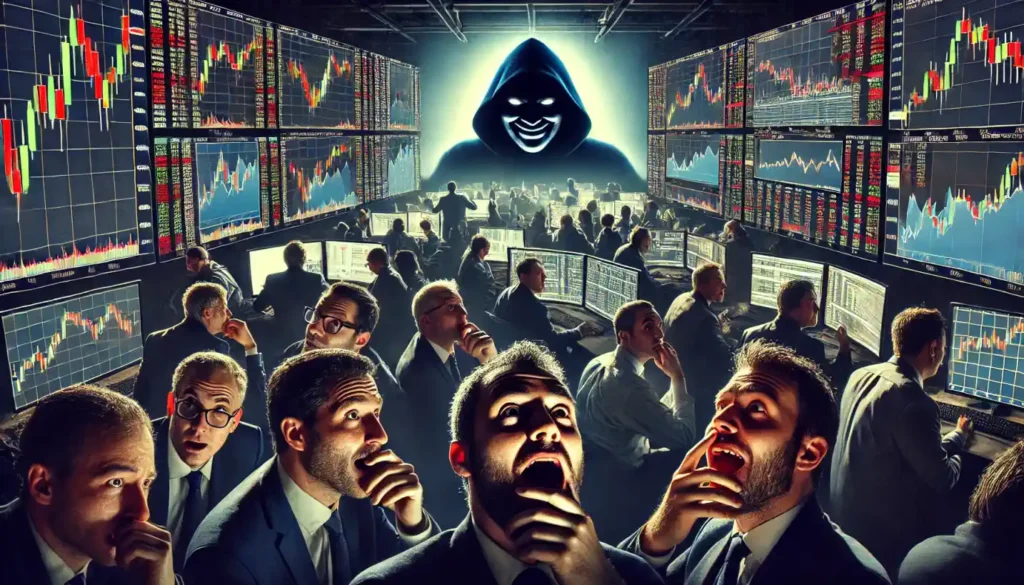
How is this possible? Because the market doesn’t care about logic, news, or trends. It moves according to the desires of those who control it. It’s about hitting stop-losses and triggering margin calls, feeding off the accounts of small traders. The market does what it wants, not what you or I predict.
The Game of Deception
Forex markets are designed to trick you. You may think you’re winning, and sometimes you might, but then the market betrays you. It lures you into a sense of security, perhaps even causing you to increase your position size, only to reverse and wipe out your account. Why does this happen? It’s simple: the market makers decide to take your money.
This isn’t just about a few unlucky trades; this happens systematically. One day, the market may rise sharply, tempting traders to go long, but then it reverses violently, taking down everyone who thought they were on the winning side. There’s no reason for these moves other than the fact that the market controllers wanted to feed off the traders’ accounts.
Indicators and Strategies: Tools of Illusion
Many traders swear by their indicators, technical analysis, and strategies. They believe that by studying charts, trends, and economic data, they can beat the market. But this is a dangerous illusion. In reality, indicators and methods are just part of the game that the market controllers want us to play.
How many times have you seen the price break through a support or resistance level, ignoring all technical signals? It happens more often than you’d like to admit. Indicators like moving averages, Fibonacci levels, and trendlines are just tools to give you a false sense of control. The market will move where it wants, regardless of what your charts say.
You might think, “I won because the price broke through a trendline,” or “I made a profit because the moving averages crossed.” But these are illusions. The market will frequently break these so-called ‘rules’ and move in ways that defy all logic. It’s not about the charts or indicators—it’s about the whims of those who control the market.
The “Perfect” News That Doesn’t Matter
We have all seen it: sensational, positive news that should logically cause a currency to rise, and yet the opposite happens. Wonderful news of immense importance for a currency’s future rolls in, and you expect the market to react accordingly. However, instead of the price rising, it continues to fall—and not just a little. It falls hard, crushing the majority of traders who placed their bets on a rise. It doesn’t stop until most traders have been wiped out. Only then does the price reverse and follow the natural path, but by then, it’s too late for most traders. Their accounts have been destroyed.
The market is not driven by reason or logic, but by manipulation. Whether it’s a sudden price drop or an unexpected reversal, the market makers decide the fate of your trades. They feed on traders’ accounts, drawing their profits from your losses. This manipulation occurs time and again. You may be lulled into a sense of security, seeing the price go in your favor, only to have the rug pulled out from under you at the last moment. You double down, thinking you’re in control, and then the market turns sharply against you, wiping out everything you’ve worked for.
The Cost of “Winning”
Even those who are lucky enough to win in this market are not truly winners. Sure, they might walk away with some profits, but at what cost? The sleepless nights, the constant monitoring of the markets, the stress, the emotional rollercoaster of profits and losses—it all takes a toll.
Winning in Forex doesn’t just cost money; it costs time, relationships, and mental health. Traders often find themselves distanced from their families, consumed by the market. The constant highs and lows exhaust the nerves and break down your peace of mind. Even if you win financially, you lose something far more valuable: your well-being.
The Forex Mirage
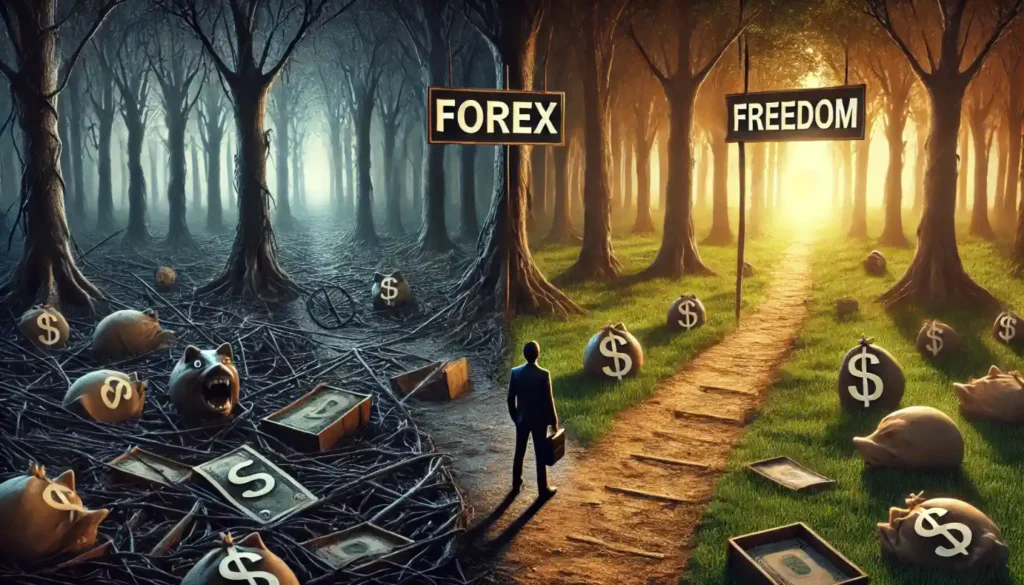
At the end of the day, Forex is a mirage. It lures you in with the promise of quick profits, making you think that you can control your destiny by predicting the market. But in reality, you have no control. The market is designed to make you lose. It’s not about technical analysis, indicators, or strategies. It’s about the market makers taking your money when they want to.
They manipulate the market to trick you into thinking that price movements are predictable, but they’re not. The moment you think you’ve figured it out, the market changes direction and wipes out your account. This is not trading—it’s a rigged game.
A Vile Industry
The entire industry surrounding Forex—courses, indicators, “expert” advisors, and training programs—is built on this deception. They are all designed to lure more people into the market, feeding them the illusion that they can succeed. In reality, they only contribute to the wealth of those who control the market while destroying the lives of ordinary traders.
Indicators are not magical tools that predict the future. They simply follow the price. When the price goes up, they go up, and when it goes down, they follow suit. They hold no real value, and they certainly don’t control the market. Don’t fool yourself into thinking that the lines you draw on your chart are going to stop the market from moving. It’s nonsense.
Conclusion: Escape the Illusion
Forex is a game of deception, designed to make you lose. It’s a carefully constructed illusion, disguised as a legitimate form of trading. The charts, indicators, and methods are all part of the game they want you to play, but the truth is that none of it matters. The market moves as its controllers want, not according to any logic or rules.
If you’re involved in Forex, it’s time to step away. The cost of continuing is too high, both financially and emotionally. Don’t be fooled by the mirage of profits. Protect your wealth, your health, and your peace of mind by leaving this destructive industry behind.
In the end, Forex is not trading. It’s gambling—plain and simple.